
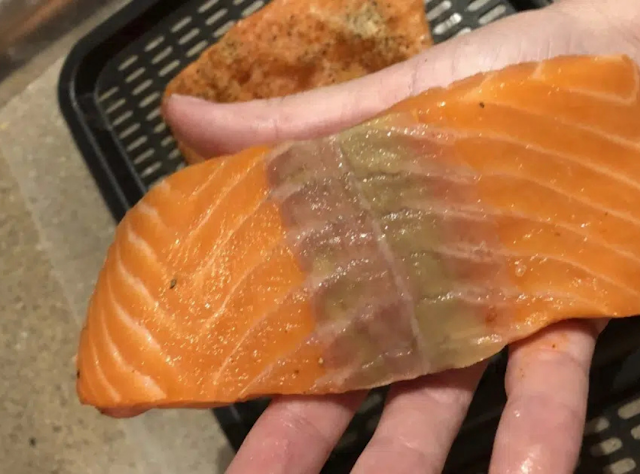
How to Check if Your Salmon Is Still Good: The Detective’s Toolkit
In my detective mission to ensure that the yellowing salmon was still edible, I employed several simple, time-tested methods.
1. The Sniff Test
Fresh salmon should have a neutral, briny scent, almost like a fresh ocean breeze. If it smells overly fishy, sour, or ammonia-like, it’s likely past its prime.
Pro Tip: Trust your nose. If something smells “off,” it probably is.
2. The Touch Test
Press down gently on the flesh. Fresh salmon should feel firm and spring back slightly. If it feels mushy, slimy, or leaves an indentation, it may be spoiling.
Pro Tip: Use clean hands or a utensil to avoid cross-contamination.
3. The Visual Inspection
Look beyond the yellow tint. Check for:
Unusual discoloration (gray, green, or black spots)
Cloudy or milky residue on the surface
Signs of mold or fuzzy growth
Pro Tip: Good lighting matters. Examine the fish under natural light if possible.
4. The Taste Test (After Cooking)
If the salmon passes the above checks, cook a small piece and taste it. Fresh salmon should taste clean, mild, and slightly sweet. Any sour, bitter, or “off” flavors indicate it should be discarded.
Pro Tip: Never taste raw fish to check freshness. Always cook first.
In my case, the salmon passed all tests. I trimmed off the yellow section just to be extra cautious and then cooked it up with a bit of lemon and dill. The result? Juicy, delicious, and gone in minutes.
