
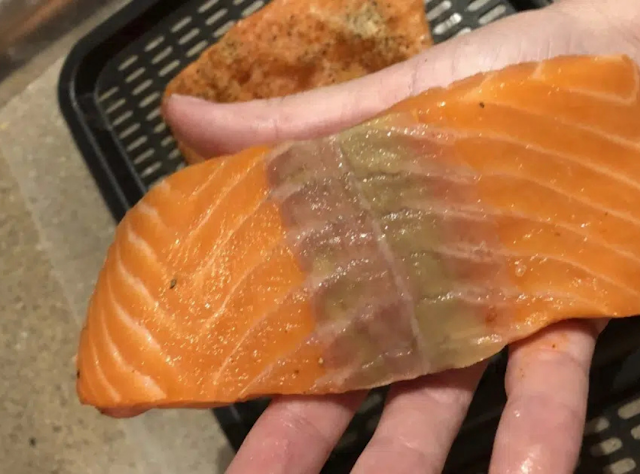
Understanding the Yellow Tint: What’s Really Happening?
Oxidized Fat: The Most Common Culprit
First, I discovered that the yellow tint is often attributed to oxidized fat. Salmon is a naturally fatty fish, which is one of the reasons it tastes so rich and succulent. But sometimes, when frozen for long periods or improperly stored, the fat can oxidize and change color.
The Science Simplified:
Oxidation occurs when fats are exposed to oxygen over time, similar to how an apple slice turns brown when left out.
This chemical reaction alters the color but doesn’t necessarily make the fish unsafe.
The texture and flavor may be slightly affected, but the salmon can still be perfectly edible.
What to Do:
Check for other signs of spoilage: sour smell, slimy texture, or off-putting taste.
If none of these are present, the yellow tint is likely cosmetic, not dangerous.
When in doubt, trim the discolored area before cooking.
Freezer Burn: The Invisible Thief
Freezer burn is another culprit. If the salmon isn’t properly sealed or protected in the freezer, it can lose moisture and develop discoloration, sometimes manifesting as a yellow or white spot.
Why It Happens:
Air exposure causes moisture to evaporate from the fish’s surface.
The dehydrated areas change color and texture, becoming dry or leathery.
While unappetizing, freezer burn doesn’t make food unsafe—just less enjoyable.
What to Do:
Trim off the affected area with a sharp knife.
The remaining salmon is usually perfectly fine to cook and eat.
For best results, use freezer-burned fish in dishes with strong sauces or seasonings that can mask any textural changes.
Natural Variation: Not Always a Bad Thing
Then there’s the natural side of things. Some salmon species can have a slightly yellowish hue to their belly, especially wild-caught ones. It’s usually because of their diet, like crustaceans or algae, which can contain pigments that affect the color of their flesh.
The Details:
Wild salmon diets vary by region and season, leading to natural color differences.
Farm-raised salmon are often more consistent in color due to controlled diets, but variations can still occur.
A yellowish belly or subtle tint along the edges may simply reflect the fish’s natural biology.
What to Do:
If the color appears uniform and natural (not patchy or discolored), it’s likely just a variation.
Combine this observation with smell and texture tests for full confidence.

